🎉 Up to 70% Off Selected ItemsShop Sale

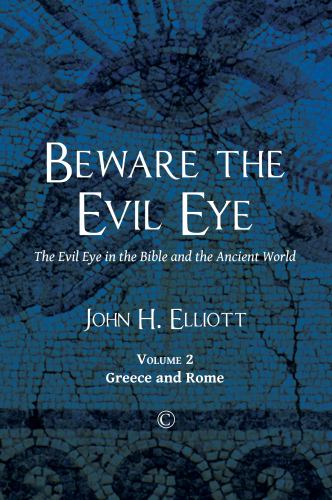
Beware the Evil Eye
In Volume 2 of Beware the Evil Eye, John H. Elliott addresses the most extensive sources of Evil Eye belief in antiquity: the cultures of Greece and Rome. In this period, features of the belief found in Mesopotamian and Egyptian sources are expandedto the point where an Evil Eye belief complex becomes apparent. This complex of features associated with the Evil Eye - human eye as key organ of information, eye as active not passive, eye as channel of emotion and dispositions, especially envy, arising in the heart, possessors, victims, defensive strategies, and amulets - is essential to an understanding of the literary references to the Evil Eye. Elliott here illuminates the context for examining Evil Eye belief and practice in the Bible and the biblical communities.
$20.33
Original: $58.09
-65%Beware the Evil Eye—
$58.09
$20.33Beware the Evil Eye
In Volume 2 of Beware the Evil Eye, John H. Elliott addresses the most extensive sources of Evil Eye belief in antiquity: the cultures of Greece and Rome. In this period, features of the belief found in Mesopotamian and Egyptian sources are expandedto the point where an Evil Eye belief complex becomes apparent. This complex of features associated with the Evil Eye - human eye as key organ of information, eye as active not passive, eye as channel of emotion and dispositions, especially envy, arising in the heart, possessors, victims, defensive strategies, and amulets - is essential to an understanding of the literary references to the Evil Eye. Elliott here illuminates the context for examining Evil Eye belief and practice in the Bible and the biblical communities.
Product Information
Product Information
Shipping & Returns
Shipping & Returns
Description
In Volume 2 of Beware the Evil Eye, John H. Elliott addresses the most extensive sources of Evil Eye belief in antiquity: the cultures of Greece and Rome. In this period, features of the belief found in Mesopotamian and Egyptian sources are expandedto the point where an Evil Eye belief complex becomes apparent. This complex of features associated with the Evil Eye - human eye as key organ of information, eye as active not passive, eye as channel of emotion and dispositions, especially envy, arising in the heart, possessors, victims, defensive strategies, and amulets - is essential to an understanding of the literary references to the Evil Eye. Elliott here illuminates the context for examining Evil Eye belief and practice in the Bible and the biblical communities.