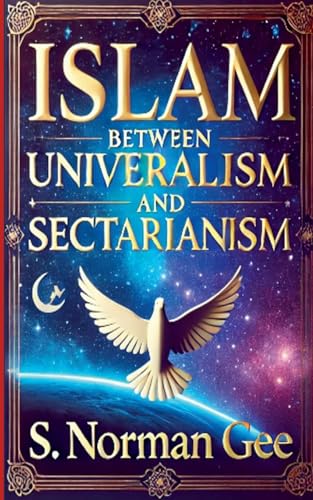
Islam Between Universalism and Sectarianism
The Prophet's model represented Islam's universal mission, with the divine intention of establishing an indivisible faith. His leadership sought to transcend differences, emphasizing the oneness of God, unity within the Ummah, and a divinely appointed lineage to safeguard the faith. However, the subsequent era introduced sectarianism, marking a departure from the initial model. Leadership shifted from a unified, celestial mission to a system characterized by political maneuvering, resulting in diverse interpretations, sects, and ultimately a fractured Islamic identity.
Original: $6.99
-65%$6.99
$2.45Islam Between Universalism and Sectarianism
The Prophet's model represented Islam's universal mission, with the divine intention of establishing an indivisible faith. His leadership sought to transcend differences, emphasizing the oneness of God, unity within the Ummah, and a divinely appointed lineage to safeguard the faith. However, the subsequent era introduced sectarianism, marking a departure from the initial model. Leadership shifted from a unified, celestial mission to a system characterized by political maneuvering, resulting in diverse interpretations, sects, and ultimately a fractured Islamic identity.
Product Information
Product Information
Shipping & Returns
Shipping & Returns
Description
The Prophet's model represented Islam's universal mission, with the divine intention of establishing an indivisible faith. His leadership sought to transcend differences, emphasizing the oneness of God, unity within the Ummah, and a divinely appointed lineage to safeguard the faith. However, the subsequent era introduced sectarianism, marking a departure from the initial model. Leadership shifted from a unified, celestial mission to a system characterized by political maneuvering, resulting in diverse interpretations, sects, and ultimately a fractured Islamic identity.