The Last Seed
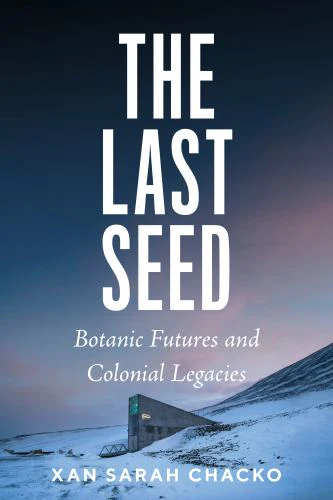
Often celebrated as humanity’s last defense against ecological collapse, seed banks are meant to preserve plant life against extinction. The Last Seed offers a striking reassessment of that promise. Drawing on original fieldwork at major institutions including the Millennium Seed Bank at Kew Gardens, the Svalbard Global Seed Vault, and seed collections in the United States and India, this book opens the closed world of seed banking to critical scrutiny.
Through feminist science and technology studies and decolonial analysis, Xan Sarah Chacko reveals how contemporary conservation practices remain deeply entangled with the histories of imperial botany and global plant extraction. Seeds preserved in frozen vaults are not merely biological specimens; they are transformed into data, property, and “genetic resources” shaped by institutional priorities, legal regimes, and visions of future agriculture.
The narrative moves between laboratories, archives, and international seed repositories to show how scientific care, bureaucratic classification, and intellectual property regimes reshape relationships among plants, people, and environments. At stake is more than biodiversity preservation: seed banks participate in a broader project of imagining—and controlling—the future of life on Earth.
The Last Seed challenges the comforting image of conservation as neutral stewardship, revealing instead a global system where hope for ecological survival coexists with enduring colonial power.
The Last Seed
Often celebrated as humanity’s last defense against ecological collapse, seed banks are meant to preserve plant life against extinction. The Last Seed offers a striking reassessment of that promise. Drawing on original fieldwork at major institutions including the Millennium Seed Bank at Kew Gardens, the Svalbard Global Seed Vault, and seed collections in the United States and India, this book opens the closed world of seed banking to critical scrutiny.
Through feminist science and technology studies and decolonial analysis, Xan Sarah Chacko reveals how contemporary conservation practices remain deeply entangled with the histories of imperial botany and global plant extraction. Seeds preserved in frozen vaults are not merely biological specimens; they are transformed into data, property, and “genetic resources” shaped by institutional priorities, legal regimes, and visions of future agriculture.
The narrative moves between laboratories, archives, and international seed repositories to show how scientific care, bureaucratic classification, and intellectual property regimes reshape relationships among plants, people, and environments. At stake is more than biodiversity preservation: seed banks participate in a broader project of imagining—and controlling—the future of life on Earth.
The Last Seed challenges the comforting image of conservation as neutral stewardship, revealing instead a global system where hope for ecological survival coexists with enduring colonial power.
Product Information
Product Information
Shipping & Returns
Shipping & Returns
Description
Often celebrated as humanity’s last defense against ecological collapse, seed banks are meant to preserve plant life against extinction. The Last Seed offers a striking reassessment of that promise. Drawing on original fieldwork at major institutions including the Millennium Seed Bank at Kew Gardens, the Svalbard Global Seed Vault, and seed collections in the United States and India, this book opens the closed world of seed banking to critical scrutiny.
Through feminist science and technology studies and decolonial analysis, Xan Sarah Chacko reveals how contemporary conservation practices remain deeply entangled with the histories of imperial botany and global plant extraction. Seeds preserved in frozen vaults are not merely biological specimens; they are transformed into data, property, and “genetic resources” shaped by institutional priorities, legal regimes, and visions of future agriculture.
The narrative moves between laboratories, archives, and international seed repositories to show how scientific care, bureaucratic classification, and intellectual property regimes reshape relationships among plants, people, and environments. At stake is more than biodiversity preservation: seed banks participate in a broader project of imagining—and controlling—the future of life on Earth.
The Last Seed challenges the comforting image of conservation as neutral stewardship, revealing instead a global system where hope for ecological survival coexists with enduring colonial power.