Louis Lambert
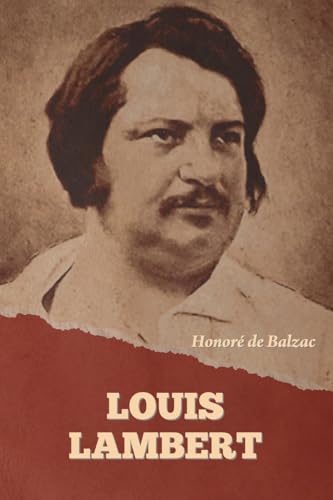
Louis Lambert is an 1832 novel by French novelist and playwright Honor de Balzac (1799-1850), included in the tudes philosophiques section of his novel sequence La Com die humaine. Set mostly in a school at Vend me, it examines the life and theories of a boy genius fascinated by the Swedish philosopher Emanuel Swedenborg (1688-1772).
Balzac wrote Louis Lambert during the summer of 1832 while he was staying with friends at the Ch teau de Sach , and published three editions with three different titles. The novel contains a minimal plot, focusing mostly on the metaphysical ideas of its boy-genius protagonist and his only friend (eventually revealed to be Balzac himself). Although it is not a significant example of the realist style for which Balzac became famous, the novel provides insight into the author's own childhood. Specific details and events from the author's life - including punishment from teachers and social ostracism - suggest a fictionalized autobiography.
While he was a student at Vend me, Balzac wrote an essay called Trait de la Volont (Treatise on the Will); it is described in the novel as being written by Louis Lambert. The essay discusses the philosophy of Swedenborg and others, although Balzac did not explore many of the metaphysical concepts until much later in his life. Ideas analyzed in the essay and elsewhere in the novel include the split between inward and outward existence; the presence of angels and spiritual enlightenment; and the interplay between genius and madness.
Although critics panned the novel, Balzac remained steadfast in his belief that it provided an important look at philosophy, especially metaphysics. As he developed the scheme for La Com die humaine, he placed Louis Lambert in the tudes philosophiques section, and later returned to the same themes in his novel S raph ta, about an androgynous angelic creature.
Biographers and critics agree that Louis Lambert is a thinly veiled version of the author, evidenced by numerous similarities between them. As a student at the Coll ge de Vend me, Balzac was friends with a boy named Louis-Lambert Tinant. Like the title character, Balzac's faith was shaken at the time of his first communion. Balzac read voraciously while in school, and - like Lambert - was often punished for misbehaving in class. The precise details of the school also reflect Balzac's time there: as described in the novel, students were allowed to keep pigeons and tend gardens, and holidays were spent in the dormitories.
Lambert's essay about metaphysics, Trait de la Volont (Treatise on the Will), is another autobiographical reference. Balzac wrote the essay himself as a boy, and - as in the novel - it was confiscated by an angry teacher. Lambert's genius and philosophical erudition are reflections of Balzac's self-conception. Similarly, some critics and biographers have suggested that Lambert's madness reflects (consciously or not) Balzac's own unsteady mental state. His plans to run for parliament and other non-literary ambitions led observers at the time to suspect his sanity.
The many letters in the novel written by Lambert are also based on Balzac's life. After finishing the first version of the book, Balzac tried to win the heart of the Marquise de Castries by sending her a fragmented love letter from the book. Lambert's letters to his uncle about life in Paris from 1817 to 1820, meanwhile, mirror Balzac's own sentiments while attending the Sorbonne at the same time. (wikipedia.org)
Louis Lambert
Louis Lambert is an 1832 novel by French novelist and playwright Honor de Balzac (1799-1850), included in the tudes philosophiques section of his novel sequence La Com die humaine. Set mostly in a school at Vend me, it examines the life and theories of a boy genius fascinated by the Swedish philosopher Emanuel Swedenborg (1688-1772).
Balzac wrote Louis Lambert during the summer of 1832 while he was staying with friends at the Ch teau de Sach , and published three editions with three different titles. The novel contains a minimal plot, focusing mostly on the metaphysical ideas of its boy-genius protagonist and his only friend (eventually revealed to be Balzac himself). Although it is not a significant example of the realist style for which Balzac became famous, the novel provides insight into the author's own childhood. Specific details and events from the author's life - including punishment from teachers and social ostracism - suggest a fictionalized autobiography.
While he was a student at Vend me, Balzac wrote an essay called Trait de la Volont (Treatise on the Will); it is described in the novel as being written by Louis Lambert. The essay discusses the philosophy of Swedenborg and others, although Balzac did not explore many of the metaphysical concepts until much later in his life. Ideas analyzed in the essay and elsewhere in the novel include the split between inward and outward existence; the presence of angels and spiritual enlightenment; and the interplay between genius and madness.
Although critics panned the novel, Balzac remained steadfast in his belief that it provided an important look at philosophy, especially metaphysics. As he developed the scheme for La Com die humaine, he placed Louis Lambert in the tudes philosophiques section, and later returned to the same themes in his novel S raph ta, about an androgynous angelic creature.
Biographers and critics agree that Louis Lambert is a thinly veiled version of the author, evidenced by numerous similarities between them. As a student at the Coll ge de Vend me, Balzac was friends with a boy named Louis-Lambert Tinant. Like the title character, Balzac's faith was shaken at the time of his first communion. Balzac read voraciously while in school, and - like Lambert - was often punished for misbehaving in class. The precise details of the school also reflect Balzac's time there: as described in the novel, students were allowed to keep pigeons and tend gardens, and holidays were spent in the dormitories.
Lambert's essay about metaphysics, Trait de la Volont (Treatise on the Will), is another autobiographical reference. Balzac wrote the essay himself as a boy, and - as in the novel - it was confiscated by an angry teacher. Lambert's genius and philosophical erudition are reflections of Balzac's self-conception. Similarly, some critics and biographers have suggested that Lambert's madness reflects (consciously or not) Balzac's own unsteady mental state. His plans to run for parliament and other non-literary ambitions led observers at the time to suspect his sanity.
The many letters in the novel written by Lambert are also based on Balzac's life. After finishing the first version of the book, Balzac tried to win the heart of the Marquise de Castries by sending her a fragmented love letter from the book. Lambert's letters to his uncle about life in Paris from 1817 to 1820, meanwhile, mirror Balzac's own sentiments while attending the Sorbonne at the same time. (wikipedia.org)
Product Information
Product Information
Shipping & Returns
Shipping & Returns
Description
Louis Lambert is an 1832 novel by French novelist and playwright Honor de Balzac (1799-1850), included in the tudes philosophiques section of his novel sequence La Com die humaine. Set mostly in a school at Vend me, it examines the life and theories of a boy genius fascinated by the Swedish philosopher Emanuel Swedenborg (1688-1772).
Balzac wrote Louis Lambert during the summer of 1832 while he was staying with friends at the Ch teau de Sach , and published three editions with three different titles. The novel contains a minimal plot, focusing mostly on the metaphysical ideas of its boy-genius protagonist and his only friend (eventually revealed to be Balzac himself). Although it is not a significant example of the realist style for which Balzac became famous, the novel provides insight into the author's own childhood. Specific details and events from the author's life - including punishment from teachers and social ostracism - suggest a fictionalized autobiography.
While he was a student at Vend me, Balzac wrote an essay called Trait de la Volont (Treatise on the Will); it is described in the novel as being written by Louis Lambert. The essay discusses the philosophy of Swedenborg and others, although Balzac did not explore many of the metaphysical concepts until much later in his life. Ideas analyzed in the essay and elsewhere in the novel include the split between inward and outward existence; the presence of angels and spiritual enlightenment; and the interplay between genius and madness.
Although critics panned the novel, Balzac remained steadfast in his belief that it provided an important look at philosophy, especially metaphysics. As he developed the scheme for La Com die humaine, he placed Louis Lambert in the tudes philosophiques section, and later returned to the same themes in his novel S raph ta, about an androgynous angelic creature.
Biographers and critics agree that Louis Lambert is a thinly veiled version of the author, evidenced by numerous similarities between them. As a student at the Coll ge de Vend me, Balzac was friends with a boy named Louis-Lambert Tinant. Like the title character, Balzac's faith was shaken at the time of his first communion. Balzac read voraciously while in school, and - like Lambert - was often punished for misbehaving in class. The precise details of the school also reflect Balzac's time there: as described in the novel, students were allowed to keep pigeons and tend gardens, and holidays were spent in the dormitories.
Lambert's essay about metaphysics, Trait de la Volont (Treatise on the Will), is another autobiographical reference. Balzac wrote the essay himself as a boy, and - as in the novel - it was confiscated by an angry teacher. Lambert's genius and philosophical erudition are reflections of Balzac's self-conception. Similarly, some critics and biographers have suggested that Lambert's madness reflects (consciously or not) Balzac's own unsteady mental state. His plans to run for parliament and other non-literary ambitions led observers at the time to suspect his sanity.
The many letters in the novel written by Lambert are also based on Balzac's life. After finishing the first version of the book, Balzac tried to win the heart of the Marquise de Castries by sending her a fragmented love letter from the book. Lambert's letters to his uncle about life in Paris from 1817 to 1820, meanwhile, mirror Balzac's own sentiments while attending the Sorbonne at the same time. (wikipedia.org)