🎉 Up to 70% Off Selected ItemsShop Sale

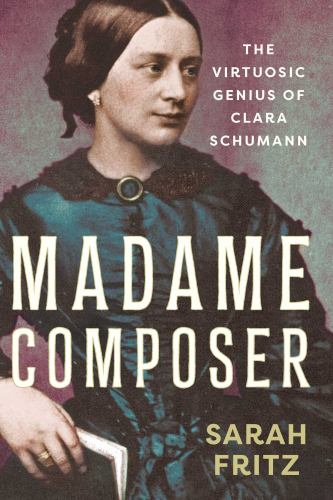
Madame Composer
A triumphant and striking portrait of a cultural icon who changed the course of music history, and an invitation to reconsider artistic legacies.
A child prodigy equal to Mozart, Paganini called her a “genuine artist;” Goethe said “she plays with the strength of six boys.” She premiered the “unplayable” works of Chopin at age twelve and brought Bach fugues and Beethoven sonatas into the concert hall at sixteen. During her sixty-year career, she made Robert Schumann a household name and premiered Brahms’s famous “Lullaby.” Many critics—who dubbed her “Saint Cecilia,” “queen of the piano,” and a “priestess of art”—preferred her piano playing to her rival Franz Liszt.
Why is her name not uttered in the breath as Liszt, Brahms, or Mozart today? In Madame Composer, Sarah Fritz reveals how and why Clara Weick Schumann, a giant of Romantic music, has been diminished and sometimes deliberately obscured. By exposing the Nazi propaganda which buried Clara Schumann’s achievements, the power Clara once wielded in the industry comes to the fore. Fritz exposes the truth behind why Clara devoted her career to promoting men’s works instead of her own creations, even though her melodies were quoted in famous works by Brahms, Liszt, and others, which is revealed in print for the first time.
Clara’s life was more fascinating than fiction. A neurodivergent child, she shared a forbidden love with the poor composer Robert Schumann, whose tragic death in an asylum left her a single parent of seven children. And her forty-year relationship with Brahms is one of the most important artist-mentor partnerships in cultural history yet has long been relegated to tabloid scandal.
Filled with new discoveries and insight, Sarah Fritz’s fierce and dynamic Madame Composer is the definitive biography on a singular musical force and reveals Clara as a woman in full.
A child prodigy equal to Mozart, Paganini called her a “genuine artist;” Goethe said “she plays with the strength of six boys.” She premiered the “unplayable” works of Chopin at age twelve and brought Bach fugues and Beethoven sonatas into the concert hall at sixteen. During her sixty-year career, she made Robert Schumann a household name and premiered Brahms’s famous “Lullaby.” Many critics—who dubbed her “Saint Cecilia,” “queen of the piano,” and a “priestess of art”—preferred her piano playing to her rival Franz Liszt.
Why is her name not uttered in the breath as Liszt, Brahms, or Mozart today? In Madame Composer, Sarah Fritz reveals how and why Clara Weick Schumann, a giant of Romantic music, has been diminished and sometimes deliberately obscured. By exposing the Nazi propaganda which buried Clara Schumann’s achievements, the power Clara once wielded in the industry comes to the fore. Fritz exposes the truth behind why Clara devoted her career to promoting men’s works instead of her own creations, even though her melodies were quoted in famous works by Brahms, Liszt, and others, which is revealed in print for the first time.
Clara’s life was more fascinating than fiction. A neurodivergent child, she shared a forbidden love with the poor composer Robert Schumann, whose tragic death in an asylum left her a single parent of seven children. And her forty-year relationship with Brahms is one of the most important artist-mentor partnerships in cultural history yet has long been relegated to tabloid scandal.
Filled with new discoveries and insight, Sarah Fritz’s fierce and dynamic Madame Composer is the definitive biography on a singular musical force and reveals Clara as a woman in full.
$15.05
Original: $42.99
-65%Madame Composer—
$42.99
$15.05Madame Composer
A triumphant and striking portrait of a cultural icon who changed the course of music history, and an invitation to reconsider artistic legacies.
A child prodigy equal to Mozart, Paganini called her a “genuine artist;” Goethe said “she plays with the strength of six boys.” She premiered the “unplayable” works of Chopin at age twelve and brought Bach fugues and Beethoven sonatas into the concert hall at sixteen. During her sixty-year career, she made Robert Schumann a household name and premiered Brahms’s famous “Lullaby.” Many critics—who dubbed her “Saint Cecilia,” “queen of the piano,” and a “priestess of art”—preferred her piano playing to her rival Franz Liszt.
Why is her name not uttered in the breath as Liszt, Brahms, or Mozart today? In Madame Composer, Sarah Fritz reveals how and why Clara Weick Schumann, a giant of Romantic music, has been diminished and sometimes deliberately obscured. By exposing the Nazi propaganda which buried Clara Schumann’s achievements, the power Clara once wielded in the industry comes to the fore. Fritz exposes the truth behind why Clara devoted her career to promoting men’s works instead of her own creations, even though her melodies were quoted in famous works by Brahms, Liszt, and others, which is revealed in print for the first time.
Clara’s life was more fascinating than fiction. A neurodivergent child, she shared a forbidden love with the poor composer Robert Schumann, whose tragic death in an asylum left her a single parent of seven children. And her forty-year relationship with Brahms is one of the most important artist-mentor partnerships in cultural history yet has long been relegated to tabloid scandal.
Filled with new discoveries and insight, Sarah Fritz’s fierce and dynamic Madame Composer is the definitive biography on a singular musical force and reveals Clara as a woman in full.
A child prodigy equal to Mozart, Paganini called her a “genuine artist;” Goethe said “she plays with the strength of six boys.” She premiered the “unplayable” works of Chopin at age twelve and brought Bach fugues and Beethoven sonatas into the concert hall at sixteen. During her sixty-year career, she made Robert Schumann a household name and premiered Brahms’s famous “Lullaby.” Many critics—who dubbed her “Saint Cecilia,” “queen of the piano,” and a “priestess of art”—preferred her piano playing to her rival Franz Liszt.
Why is her name not uttered in the breath as Liszt, Brahms, or Mozart today? In Madame Composer, Sarah Fritz reveals how and why Clara Weick Schumann, a giant of Romantic music, has been diminished and sometimes deliberately obscured. By exposing the Nazi propaganda which buried Clara Schumann’s achievements, the power Clara once wielded in the industry comes to the fore. Fritz exposes the truth behind why Clara devoted her career to promoting men’s works instead of her own creations, even though her melodies were quoted in famous works by Brahms, Liszt, and others, which is revealed in print for the first time.
Clara’s life was more fascinating than fiction. A neurodivergent child, she shared a forbidden love with the poor composer Robert Schumann, whose tragic death in an asylum left her a single parent of seven children. And her forty-year relationship with Brahms is one of the most important artist-mentor partnerships in cultural history yet has long been relegated to tabloid scandal.
Filled with new discoveries and insight, Sarah Fritz’s fierce and dynamic Madame Composer is the definitive biography on a singular musical force and reveals Clara as a woman in full.
Product Information
Product Information
Shipping & Returns
Shipping & Returns
Description
A triumphant and striking portrait of a cultural icon who changed the course of music history, and an invitation to reconsider artistic legacies.
A child prodigy equal to Mozart, Paganini called her a “genuine artist;” Goethe said “she plays with the strength of six boys.” She premiered the “unplayable” works of Chopin at age twelve and brought Bach fugues and Beethoven sonatas into the concert hall at sixteen. During her sixty-year career, she made Robert Schumann a household name and premiered Brahms’s famous “Lullaby.” Many critics—who dubbed her “Saint Cecilia,” “queen of the piano,” and a “priestess of art”—preferred her piano playing to her rival Franz Liszt.
Why is her name not uttered in the breath as Liszt, Brahms, or Mozart today? In Madame Composer, Sarah Fritz reveals how and why Clara Weick Schumann, a giant of Romantic music, has been diminished and sometimes deliberately obscured. By exposing the Nazi propaganda which buried Clara Schumann’s achievements, the power Clara once wielded in the industry comes to the fore. Fritz exposes the truth behind why Clara devoted her career to promoting men’s works instead of her own creations, even though her melodies were quoted in famous works by Brahms, Liszt, and others, which is revealed in print for the first time.
Clara’s life was more fascinating than fiction. A neurodivergent child, she shared a forbidden love with the poor composer Robert Schumann, whose tragic death in an asylum left her a single parent of seven children. And her forty-year relationship with Brahms is one of the most important artist-mentor partnerships in cultural history yet has long been relegated to tabloid scandal.
Filled with new discoveries and insight, Sarah Fritz’s fierce and dynamic Madame Composer is the definitive biography on a singular musical force and reveals Clara as a woman in full.
A child prodigy equal to Mozart, Paganini called her a “genuine artist;” Goethe said “she plays with the strength of six boys.” She premiered the “unplayable” works of Chopin at age twelve and brought Bach fugues and Beethoven sonatas into the concert hall at sixteen. During her sixty-year career, she made Robert Schumann a household name and premiered Brahms’s famous “Lullaby.” Many critics—who dubbed her “Saint Cecilia,” “queen of the piano,” and a “priestess of art”—preferred her piano playing to her rival Franz Liszt.
Why is her name not uttered in the breath as Liszt, Brahms, or Mozart today? In Madame Composer, Sarah Fritz reveals how and why Clara Weick Schumann, a giant of Romantic music, has been diminished and sometimes deliberately obscured. By exposing the Nazi propaganda which buried Clara Schumann’s achievements, the power Clara once wielded in the industry comes to the fore. Fritz exposes the truth behind why Clara devoted her career to promoting men’s works instead of her own creations, even though her melodies were quoted in famous works by Brahms, Liszt, and others, which is revealed in print for the first time.
Clara’s life was more fascinating than fiction. A neurodivergent child, she shared a forbidden love with the poor composer Robert Schumann, whose tragic death in an asylum left her a single parent of seven children. And her forty-year relationship with Brahms is one of the most important artist-mentor partnerships in cultural history yet has long been relegated to tabloid scandal.
Filled with new discoveries and insight, Sarah Fritz’s fierce and dynamic Madame Composer is the definitive biography on a singular musical force and reveals Clara as a woman in full.