🎉 Up to 70% Off Selected ItemsShop Sale

HomeStore
The Making of Modern Hospitals in Central Europe between the Enlightenment and the Second World War
The Making of Modern Hospitals in Central Europe between the Enlightenment and the Second World War
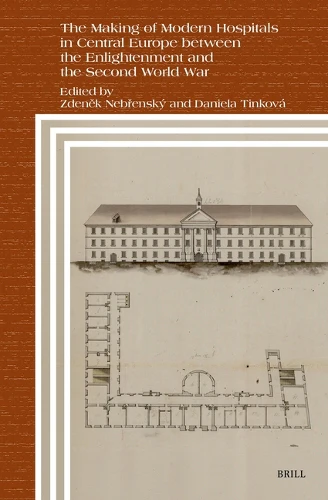
This book fills an existing gap in the history of modern medicine by examining Central European hospitals. It does not subscribe to the “big bang theory” of the sudden rise of the modern hospital. Instead, it traces the (micro-)history of the municipal, university, and church hospitals, as well as the provincial institutions for the mentally ill. It raises the question of how authorities, burghers, physicians, patients, and staff dismantled caregiving premises and promoted the establishment of modern healthcare infrastructures while Central Europe was still widely associated with menacing plague and cholera epidemics.
Contributors are: Zdeněk Nebřenský, Ludwig Pelzl, Ingrid Kušniráková, Ivana Horbec, Eva Hajdinová, Daniela Tinková, Pavlína Pončíková, Janka Kovács, Martynas Jakulis, Piotr Franaszek, and Barbora Rambousková.
Contributors are: Zdeněk Nebřenský, Ludwig Pelzl, Ingrid Kušniráková, Ivana Horbec, Eva Hajdinová, Daniela Tinková, Pavlína Pončíková, Janka Kovács, Martynas Jakulis, Piotr Franaszek, and Barbora Rambousková.
$54.70
Original: $156.29
-65%The Making of Modern Hospitals in Central Europe between the Enlightenment and the Second World War—
$156.29
$54.70The Making of Modern Hospitals in Central Europe between the Enlightenment and the Second World War
This book fills an existing gap in the history of modern medicine by examining Central European hospitals. It does not subscribe to the “big bang theory” of the sudden rise of the modern hospital. Instead, it traces the (micro-)history of the municipal, university, and church hospitals, as well as the provincial institutions for the mentally ill. It raises the question of how authorities, burghers, physicians, patients, and staff dismantled caregiving premises and promoted the establishment of modern healthcare infrastructures while Central Europe was still widely associated with menacing plague and cholera epidemics.
Contributors are: Zdeněk Nebřenský, Ludwig Pelzl, Ingrid Kušniráková, Ivana Horbec, Eva Hajdinová, Daniela Tinková, Pavlína Pončíková, Janka Kovács, Martynas Jakulis, Piotr Franaszek, and Barbora Rambousková.
Contributors are: Zdeněk Nebřenský, Ludwig Pelzl, Ingrid Kušniráková, Ivana Horbec, Eva Hajdinová, Daniela Tinková, Pavlína Pončíková, Janka Kovács, Martynas Jakulis, Piotr Franaszek, and Barbora Rambousková.
Product Information
Product Information
Shipping & Returns
Shipping & Returns
Description
This book fills an existing gap in the history of modern medicine by examining Central European hospitals. It does not subscribe to the “big bang theory” of the sudden rise of the modern hospital. Instead, it traces the (micro-)history of the municipal, university, and church hospitals, as well as the provincial institutions for the mentally ill. It raises the question of how authorities, burghers, physicians, patients, and staff dismantled caregiving premises and promoted the establishment of modern healthcare infrastructures while Central Europe was still widely associated with menacing plague and cholera epidemics.
Contributors are: Zdeněk Nebřenský, Ludwig Pelzl, Ingrid Kušniráková, Ivana Horbec, Eva Hajdinová, Daniela Tinková, Pavlína Pončíková, Janka Kovács, Martynas Jakulis, Piotr Franaszek, and Barbora Rambousková.
Contributors are: Zdeněk Nebřenský, Ludwig Pelzl, Ingrid Kušniráková, Ivana Horbec, Eva Hajdinová, Daniela Tinková, Pavlína Pončíková, Janka Kovács, Martynas Jakulis, Piotr Franaszek, and Barbora Rambousková.