🎉 Up to 70% Off Selected ItemsShop Sale

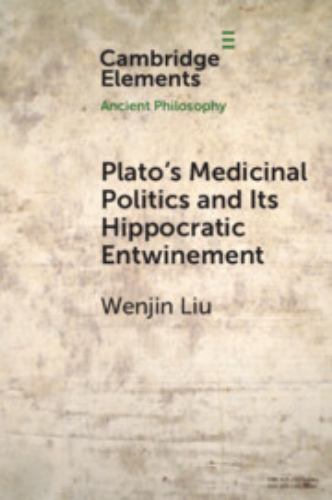
Plato’s Medicinal Politics and Its Hippocratic Entwinement
This Element argues that Plato's medical language in political contexts is not mere metaphor but a medical model of political analysis. Centering on the Republic, it shows how Plato adopts, critiques, and reworks Hippocratic ideas to diagnose, explain, evaluate, and treat political conditions. The payoff is a solution to a central puzzle: how the ideal city can be exceptionally stable yet liable to degenerate into vice. Its stability, I argue, consists in a robustness and resilience analogous to bodily health, sustained by protective institutions and practices; its fragility lies in the inevitable fallibility of those protections, which cannot indefinitely prevent, arrest, or reverse corruption over time. The Element then identifies a corrupt paideia-understood as a city-wide system of acculturation-as the singular, foundational cause of political degeneration, and closes by drawing lessons about the limits and prospects of genuine reform.
$12.11
Original: $34.59
-65%Plato’s Medicinal Politics and Its Hippocratic Entwinement—
$34.59
$12.11Plato’s Medicinal Politics and Its Hippocratic Entwinement
This Element argues that Plato's medical language in political contexts is not mere metaphor but a medical model of political analysis. Centering on the Republic, it shows how Plato adopts, critiques, and reworks Hippocratic ideas to diagnose, explain, evaluate, and treat political conditions. The payoff is a solution to a central puzzle: how the ideal city can be exceptionally stable yet liable to degenerate into vice. Its stability, I argue, consists in a robustness and resilience analogous to bodily health, sustained by protective institutions and practices; its fragility lies in the inevitable fallibility of those protections, which cannot indefinitely prevent, arrest, or reverse corruption over time. The Element then identifies a corrupt paideia-understood as a city-wide system of acculturation-as the singular, foundational cause of political degeneration, and closes by drawing lessons about the limits and prospects of genuine reform.
Product Information
Product Information
Shipping & Returns
Shipping & Returns
Description
This Element argues that Plato's medical language in political contexts is not mere metaphor but a medical model of political analysis. Centering on the Republic, it shows how Plato adopts, critiques, and reworks Hippocratic ideas to diagnose, explain, evaluate, and treat political conditions. The payoff is a solution to a central puzzle: how the ideal city can be exceptionally stable yet liable to degenerate into vice. Its stability, I argue, consists in a robustness and resilience analogous to bodily health, sustained by protective institutions and practices; its fragility lies in the inevitable fallibility of those protections, which cannot indefinitely prevent, arrest, or reverse corruption over time. The Element then identifies a corrupt paideia-understood as a city-wide system of acculturation-as the singular, foundational cause of political degeneration, and closes by drawing lessons about the limits and prospects of genuine reform.