🎉 Up to 70% Off Selected ItemsShop Sale

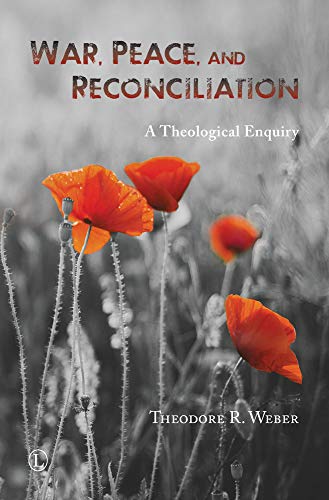
War, Peace and Reconciliation
War, Peace, and Reconciliation invites Christians and their churches into a dialogue regarding how to think about war from a standpoint rooted in faith. It asks how reconciliation, which is central to Christian life and doctrine, can engage with therealities of war without surrendering its fundamental affirmations. Theodore Weber defines these realities politically by discussing the meanings of power, peace as a particular organisation of power, and the international system. The study of war and politics is unavoidable, as is engagement with reconciliation, because all human activity exists in the context of the gracious work of God to renew and reconcile the fallen creation. Weber's inquiry is theocentric and christocentric. It culminates in a stirring call to churches to examine all their practices in the light of this perspective.
$15.61
Original: $44.59
-65%War, Peace and Reconciliation—
$44.59
$15.61War, Peace and Reconciliation
War, Peace, and Reconciliation invites Christians and their churches into a dialogue regarding how to think about war from a standpoint rooted in faith. It asks how reconciliation, which is central to Christian life and doctrine, can engage with therealities of war without surrendering its fundamental affirmations. Theodore Weber defines these realities politically by discussing the meanings of power, peace as a particular organisation of power, and the international system. The study of war and politics is unavoidable, as is engagement with reconciliation, because all human activity exists in the context of the gracious work of God to renew and reconcile the fallen creation. Weber's inquiry is theocentric and christocentric. It culminates in a stirring call to churches to examine all their practices in the light of this perspective.
Product Information
Product Information
Shipping & Returns
Shipping & Returns
Description
War, Peace, and Reconciliation invites Christians and their churches into a dialogue regarding how to think about war from a standpoint rooted in faith. It asks how reconciliation, which is central to Christian life and doctrine, can engage with therealities of war without surrendering its fundamental affirmations. Theodore Weber defines these realities politically by discussing the meanings of power, peace as a particular organisation of power, and the international system. The study of war and politics is unavoidable, as is engagement with reconciliation, because all human activity exists in the context of the gracious work of God to renew and reconcile the fallen creation. Weber's inquiry is theocentric and christocentric. It culminates in a stirring call to churches to examine all their practices in the light of this perspective.